How Much Do Fake Babies That Look Real but Are Not
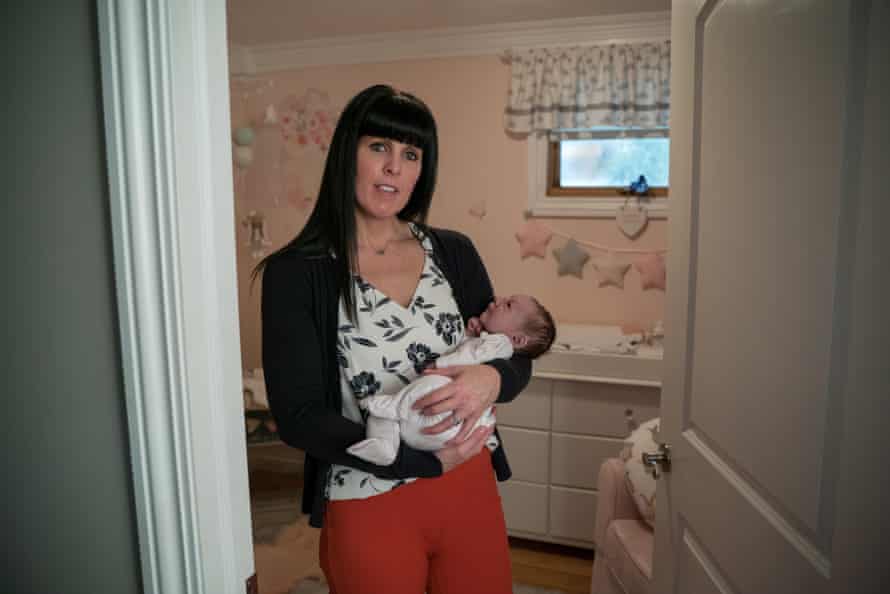
I 'm not sure what I expected a collector of hyper-realistic baby dolls to look like, but Kellie Eldred isn't it. On the frigid midwinter morning that I arrive at her Ithaca, New York, home, she greets me brightly in leggings and a cropped sweatshirt branded with the logo of a local Pilates studio. Her ink-black pilus is pulled into a pert bun behind the most perfectly straight bangs I've ever seen. She merely finished working out, she tells me, as she leads me past her husband and a trio of friendly spaniels into a spotless kitchen. A squeaky toy appears at my anxiety; its iv-legged possessor barks for a reaction.
"Please," Eldred scolds the spaniel. To me, apologetically, she says: "She'due south but a piffling crazy."
"A piffling crazy" is the aforementioned way Eldred describes the vast network of doll buyers, sellers, creators and collectors she belongs to. From Sydney to Manchester, Tokyo to San Jose, its members spend upwards of $20,000 for one doll to add to their nurseries. Some of these collectors, like Eldred, have children of their own; many don't. Most are women. They meet in spider web forums and on Facebook, through YouTube channels and, of course, in the niche online marketplaces of Etsy and eBay.
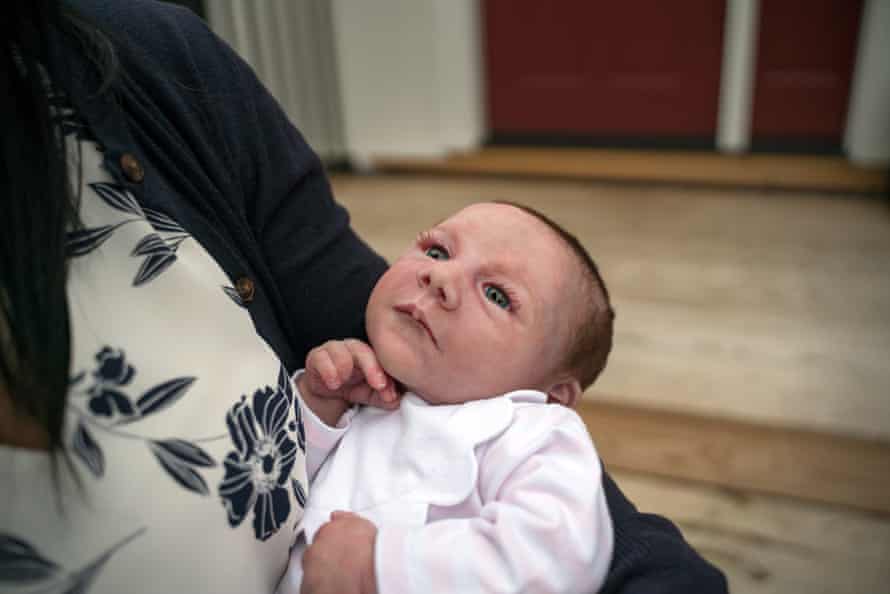
Information technology was on eBay, fashion back in 1999, that Eldred found the doll that would change her life. Stripped of its factory-fabricated features, this doll had been remodeled by an artist – or, in the parlance of collectors, reborn – to better resemble an actual infant. Its body had been weighted with flour; Crayola box approximations of flesh tones were painted over in the hobbling pulp palate of living man skin. In the shape of its eyes, the doll bore a striking resemblance to Eldred's daughter Lexi every bit a infant.
"I'd never seen or heard of annihilation like it," she recalls. Though she agonized over its $100 price tag, she couldn't become the doll out of her head. While she's bought and sold dozens of other reborns since, she still has her beginning.
In the more than ii decades since Eldred discovered these dolls, the ascent of social media has expanded the number of worldwide collectors by an order of magnitude. Today, more than thirty,000 people subscribe to her YouTube channel, where videos of her cuddling, irresolute and talking near dolls accept amassed more than 14,450,000 views.
The proliferation of these lifelike dolls has led to innovations in the dolls' creation. Many of the latest dolls are custom-shaped from proprietary silicone blends and poured into molds that, in some instances, accept been sculpted in the likeness of real newborns. The current star of Eldred'south YouTube channel, a reborn named Monroe, was made past a husband and wife team of dollmakers whose unique silicone feels remarkably like skin to the touch.
"Meet how, if you printing down on her arm, information technology takes a 2nd for the skin to settle?" asks Eldred. I press, gently, to feel the skin yield beneath my fingertips. Squeez y, I think. Like a memory foam stress brawl. Like a fat baby's face up.
Monroe is one of two dolls currently on display in the pulverization pink nursery where Eldred shoots her videos (she now has some misgivings most the color choice; "It doesn't always picture as well well," she admits). At that place's a rocking chair and a crib, a changing table and a dresser. Scallop-collared ensembles past the French children's clothier Jacadi hang on tiny hangers. When I timidly ask about a baby canteen –white with what appears to exist formula – perched alongside a tube of diaper ointment and talc, I'yard assured that they're all simply props. "There are collectors that love to role-play," she says. "I'm not that collector."
Deeply entrenched as she is in the online spaces, this is a hobby she keeps mostly to herself offline. She doesn't take the dolls out in public, like some collectors do. And, though she says her two adult daughters aren't fussed by her collecting – she's been into the hobby for most of their lives – her husband will occasionally allow slip a derisive remark during disagreements.
"Because of the hobby, and the misunderstanding, not really getting why nosotros love the hobby and so much, I think it's hard for family unit members at times and it becomes an piece of cake target," says Eldred in a 2019 video. Coping with exterior judgment is a recurring topic on her YouTube channel, and one that'southward echoed past other doll creators and collectors online.
By and large, yet, Eldred thinks that finger-pointing from outsiders may have waned in recent years. If zippo else, the community's increased exposure on social media has made more people familiar with information technology. Only Eldred tin't imagine a hereafter in which her hobby is accustomed by the mainstream.
"Trying to explain to a non-doll collector this emotional attachment to an inanimate object, people don't get it," she says in i of her YouTube videos. Its title: "Why Our Hobby Isn't Mainstream".
What are we to brand of grown women playing mommy with these dolls?
Information technology's a question that Emilie St Hilaire, a humanities PhD educatee at Concordia Academy in Montreal, has spent the terminal iii years looking into. Her research concerns the "queer and uncanny" aspects of reborns as a subcultural phenomenon. She's especially interested in the questions the hobby raises around non-reproductive mothering, developed modes of play and, concurrently, relationships with not-human being surrogates. This means she often bumps up against the widely held assumption that reborn collectors are substituting dolls for children. It's a fundamental misunderstanding of the nature of the hobby that belies deep-seated behavior near a woman'south office in society.
"If you really endeavor to unpack why a childless woman, specially one who has something that looks like a fake baby, is threatening, then nosotros start to get to what we see as the role of women: a successful woman is a successful mother," she says.
St Hilaire points out that, of the dozens of reborn collectors that she's surveyed worldwide, none retrieve of their dolls as "real" babies. (And, contrary to what many presume most collectors, she estimates that half of them already have children of their own.) Instead, St Hilaire has observed that the dolls tend to satisfy an imaginative itch in collectors, whether they're making reborns from kits and online tutorials or only choosing how to dress them. In her view, the dolls aren't child substitutes so much equally companionate props in something like a big-calibration roleplaying game.
"It doesn't make me want to accept babies, at all," says Stephanie Ortiz, a maker and collector in her mid-30s. She and her married woman Jackie ship the reborns they create in their Fresno, California, kitchen – where doll arms, legs and heads of all hues hang on the walls like surrealist cabinetry – to buyers in the United states, the United kingdom of great britain and northern ireland, Australia, Federal republic of germany, Canada and New Zealand. The YouTube channels where they show off their wares have almost 400,000 subscribers altogether.
With her forthcoming mode and simulated-militarist, Ortiz describes herself every bit a lifelong tomboy. But for as long as she tin can recollect, she'southward had a fascination with dolls. "I remember when I was a kid, I just wanted the near realistic infant [doll] I could accept," she recalls. "Even as I was beating up my cousins who were boys." To her, the dolls are about indulging her inner child and having fun; kids are a responsibility. As she wryly points out, a doll "doesn't plough into a teenager who wants an iPhone 11".
St Hilaire has institute that some collectors get a kick from bringing their dolls into public spaces and watching strangers mistake them for existent babies. "It's like having a secret," she says.
Recent pop cultural depictions tell a different story. An episode of the HBO series High Maintenance chronicles a woman'due south descent into quasi-maternal mirage after ownership a silicone reborn she names "Baby Nico" and whose care and companionship become increasingly cardinal to her life (to the chagrin of her baffled, notwithstanding supportive, husband). She changes the doll'south diapers, talks to it, takes it out. When the woman and her hubby forget Baby Nico'southward stroller exterior a hardware store, its dollness gets a heartbreaking and very public reveal – and becomes a proxy for the woman'due south unspoken loss and regret.
The new Apple TV+ series Servant serves up a much less oblique indictment of reborn collectors' psychological states. In it, a couple take in a doll they name Jericho and care for as a human baby, replete with a mysterious live-in nanny. Turns out – spoiler alert – that the couple is mourning the recent decease of their actual baby (also named Jericho), and the doll is the bereft mother's merely guard confronting a grief-induced state of catatonia.
Though the faux baby trope is wildly misleading, it's true that reborn collectors don't run into their reborns equally merely toys. Most, says St Hilaire, echo Eldred's emotional attachment to their dolls. St Hilaire describes this dynamic as "a kind of constructed relationship".
"The feeling that you get from that," she says, "isn't so different from a existent relationship"– that is, one with a human counterpart. Across social media, collectors speak openly of the special bond one tin can develop with certain reborns, every bit well as the grieving period that sometimes follows in one case a doll is permit go (as with many collecting hobbies, reborns are commonly bought then sold or swapped out, changing easily within the community). In reborn relationships, St Hilaire sees promising implications for the future of artificial intelligence and forms of non-human or humanoid companionship.
And so, there's the biological response that'south triggered when handling a realistically proportioned, lifelike baby doll. Studies suggest that doll therapy tin can reinforce feelings of attachment and emotional wellbeing in some patients with dementia. Many reborn collectors similarly betoken to the therapeutic benefits of their dolls for managing mental health conditions similar anxiety and low.
"In that location's comfort in cuddling and physically property something that feels like a baby, even though information technology'due south not a baby," says St Hilaire. "It can release some of the same endorphins."
For Lucenda Plancarte, who is a friend of Ortiz and a reborn collector in her early 30s, the hobby'due south therapeutic benefits are twofold.
"I take polycystic ovarian syndrome and stage four endometriosis," she explains from her home in Compton, California. "And I've been proven infertile. I've already had multiple treatments, surgeries, seen unlike doctors. [Having children is] just not in my cards."
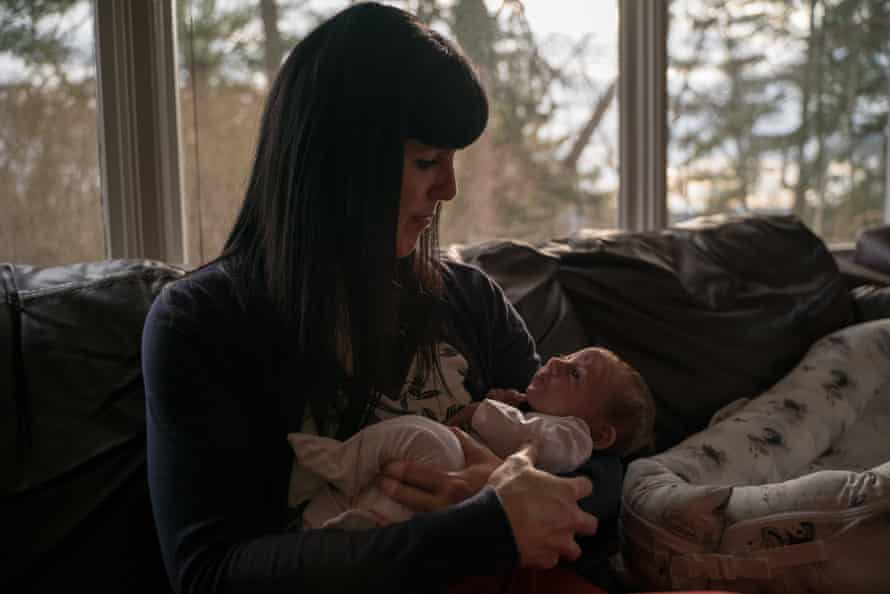
Stripped of her plans for biological motherhood, Plancarte barbarous into a deep depression. She couldn't walk past the baby departments of her local Target and Walmart without being reminded of her unlucky depict. But, as fate would have it, a solution emerged in 2012. And in an unexpected identify: An episode of the TLC reality serial My Strange Habit. The testify had featured a reborn collector; Plancarte says she was "intrigued". It was her husband'south idea that she purchase 1 for herself, despite the $120 price tag.
"Then she arrived, and it was the most magical experience ever," says Plancarte. "I was in love. It was amazing. I was like, how in the world have I never owned a reborn earlier? And it gave me a sense of purpose."
Plancarte loves being able to shop for her dolls in the same babe departments that were one time a reminder of the things she was missing out on. Caring for them, she says, is a "coping mechanism".
Plancarte knows she'south risking confrontation when she takes her dolls out in public. "It comes with the territory," she says. When people ask questions, she answers: the dolls are objects of fine art, and they make her feel skillful. They're non replacements for children.
"Right now, fostering and adoption – it's non the right time for me," she says. "And when it is, then I'll pursue that path. Just correct now, my path is collecting reborns, minding my own business, and sharing it with the globe on Instagram and YouTube."
-
This article was amended on 26 Feb 2020 to right the proper noun of Stephanie Ortiz'southward wife.
Source: https://www.theguardian.com/lifeandstyle/2020/feb/26/reborn-doll-baby-lifelike-collecting-women
0 Response to "How Much Do Fake Babies That Look Real but Are Not"
Post a Comment